
Personal Loans for Bad Credit in 2026: Emergency & Same-Day Loan Options

Getting a personal loan with bad credit can be challenging, especially when unexpected expenses require quick financial assistance. Whether you need money for an emergency car repair, medical bill, urgent household expense, or other essential cost, understanding your borrowing options can help you make a more informed decision. This guide explains how personal loans for bad credit work, what lenders typically consider, which emergency borrowing options may be available, and how to compare offers while avoiding unnecessary financial risks.

Personal Loans for Bad Credit in 2026: Emergency & Same-Day Loan Options

What Are Personal Loans for Bad Credit?

Personal loans for bad credit are loans that may be available to borrowers with limited credit histories, previous late payments, high existing debt, or relatively low credit scores.

Most personal installment loans provide a fixed amount of money that is repaid through scheduled payments over an agreed period.

Loan amounts, repayment terms, interest rates, and approval requirements vary by lender.

Unlike a credit card, a standard installment loan generally provides the borrowed amount upfront rather than a reusable credit limit.

Borrowers commonly consider personal loans for:

  • Emergency vehicle repairs.

  • Unexpected medical or dental expenses.

  • Essential home repairs.

  • Urgent transportation costs.

  • Consolidating existing debt.

  • Other necessary personal expenses.

Not every lender allows every use, and borrowing for discretionary spending may be difficult to justify when repayment funds are limited.

What Credit Score Is Considered Bad Credit?

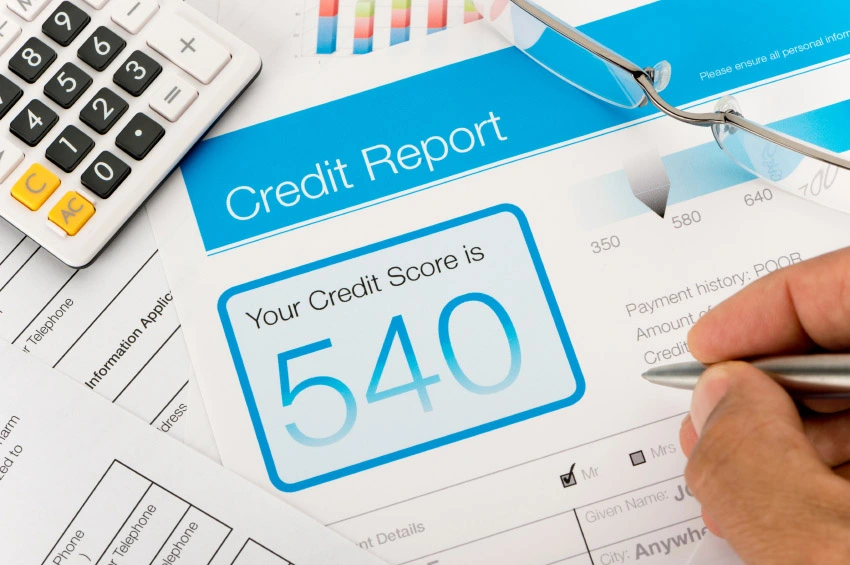
Under the commonly used FICO scoring framework, scores below 580 are generally classified as poor. However, lenders may use different scoring systems, credit bureaus, and underwriting standards.

FICO Score Range

General Classification

800–850

Exceptional

740–799

Very Good

670–739

Good

580–669

Fair

300–579

Poor

These categories describe the FICO scoring framework, not universal lender eligibility requirements.

A borrower with a score below 580 may still be considered by certain lenders, while someone with a higher score may be declined because of insufficient income, excessive debt, or other underwriting concerns.

Can You Get a Personal Loan With Bad Credit?

Yes, it may be possible to qualify for a personal loan with bad credit, but available choices can be more limited and borrowing costs can be higher.

Lenders generally assess whether applicants are likely to repay the requested amount.

According to the Consumer Financial Protection Bureau (CFPB), personal installment loan terms may depend on factors such as credit history, income, existing debts, loan amount, repayment term, and applicable state law.

Some lenders also review additional financial information to better understand repayment capacity.

Factors Lenders May Consider

Credit history: Late payments, defaults, outstanding balances, and other information in a credit report can affect underwriting decisions.

Income: Lenders may assess whether applicants have sufficient income to cover regular repayment obligations.

Debt obligations: Existing loan payments, credit card balances, and other recurring debts may influence affordability.

Employment or income stability: A consistent and verifiable source of income may help demonstrate repayment capacity. Acceptable income sources and documentation vary.

Loan amount: Requesting a smaller amount may reduce the repayment obligation, although it does not automatically improve eligibility.

Banking information: Certain lenders may verify account details or review permitted banking information during underwriting.

A low credit score does not automatically mean every application will be rejected. However, applicants should be cautious of offers promising guaranteed approval regardless of their circumstances.

Types of Personal Loans Available to Borrowers With Bad Credit

Several borrowing options may be worth comparing.

Loan Type

Main Features

Important Considerations

Unsecured Personal Loan

No specific collateral required

Approval and APR depend on creditworthiness and other factors

Secured Personal Loan

Backed by eligible collateral

Failure to repay can put collateral at risk

Credit Union Personal Loan

Offered through eligible credit union membership

Membership and underwriting requirements apply

Online Installment Loan

Online applications and scheduled repayment

Compare lender legitimacy, APR, and fees

Payday Alternative Loan

Small-dollar loan offered by participating federal credit unions

Eligibility, amount, and term restrictions apply

Payday Loan

Usually short-term with a large payment due soon

Often expensive and can create repeat borrowing risks

For many borrowers, a conventional installment loan or eligible credit union loan may offer a more manageable repayment structure than a short-term payday loan.

However, the best option depends on the actual terms, the amount needed, and the borrower's ability to repay.

Emergency Personal Loans for Bad Credit

An emergency personal loan is generally a personal loan used to cover an unexpected or time-sensitive expense.

Examples include an essential vehicle repair needed for commuting, a necessary household repair, or an urgent bill that cannot easily be postponed.

Some lenders advertise emergency loan products with digital applications, electronic document verification, and expedited processing.

However, the word "emergency" does not establish a particular interest rate, approval standard, or funding deadline.

What to Check Before Applying

When evaluating an emergency loan, consider:

  1. How much money is actually necessary.

  2. Whether the lender offers the requested loan amount.

  3. The APR and total finance charges.

  4. The required repayment schedule.

  5. Whether a lower-cost alternative is available.

  6. When approved funds could realistically become available.

Borrow only an amount that fits a reasonable repayment plan.

If an emergency expense can be divided into payments directly with the service provider, it may be possible to avoid or reduce the need for a separate loan.

Same-Day Personal Loans for Bad Credit: How Fast Can You Receive Money?

Same-day personal loans are often marketed to people who need money quickly. Some lenders may be able to process an eligible application and release approved funds on the same business day.

However, same-day funding is not the same as same-day approval, and neither outcome is guaranteed.

A borrower may receive a preliminary decision quickly but still need to complete identity, income, or banking verification before the lender can finalize the loan.

What Affects Funding Speed?

Application timing: Submitting an application before a lender's processing cutoff may affect when approved funds can be sent.

Verification requirements: Missing documents or inconsistent information can delay processing.

Bank processing: The time required for funds to appear depends partly on the receiving financial institution and the payment method used.

Weekends and holidays: Non-business days may delay electronic transfers or other processing steps.

Loan type: Funding procedures differ among banks, credit unions, and online lenders.

Funding Timeline Comparison

Stage

What It Means

What to Confirm

Prequalification

Preliminary assessment of potential eligibility

Whether a credit inquiry is performed

Application Review

Evaluation of submitted information

Required documentation

Final Approval

Lender makes a credit decision

Whether additional conditions remain

Loan Agreement

Borrower reviews and accepts terms

APR, fees, and repayment obligations

Fund Disbursement

Lender releases approved funds

Transfer method and expected timing

Funds Availability

Money becomes accessible

Bank processing and possible holds

Applicants who need money urgently should verify the lender's actual funding conditions rather than relying solely on promotional language.

Personal Loan Rates and Fees in 2026

The cost of borrowing deserves particular attention when credit scores are low.

Lenders may charge higher rates when they assess a borrower as presenting greater repayment risk.

The actual APR depends on the lender, credit profile, state law, and loan structure.

Understanding APR

APR represents the annualized cost of credit and incorporates the interest rate and certain applicable finance charges.

It is generally more useful for comparing loan offers than looking at the advertised interest rate alone.

For example, a loan with a lower stated interest rate may still be more expensive if it includes substantial mandatory fees.

Common Personal Loan Fees

Fee Type

What It Means

Origination Fee

Charge for originating or processing a loan

Late Payment Fee

Charge that may apply after a missed payment

Insufficient Funds Fee

Possible charge when a scheduled payment fails

Documentation Fee

Charge that may apply for preparing loan documents

Prepayment Charge

Charge for early repayment, if permitted and included in the agreement

Not every lender charges these fees.

The CFPB advises consumers to review loan disclosures and compare multiple offers rather than assessing borrowing costs from the interest rate alone.

How an Origination Fee Affects the Money You Receive

Suppose a lender approves a hypothetical $2,000 loan with a 5% origination fee deducted from the proceeds.

Item

Illustrative Amount

Loan Principal

$2,000

Origination Fee (5%)

$100

Net Funds Received

$1,900

In this example, the borrower receives $1,900 but still has a $2,000 principal obligation.

Interest charges and repayment terms would depend on the agreement.

This is a mathematical illustration, not a current lender offer or a typical market fee.

How to Compare Personal Loans for Bad Credit

Choosing a personal loan should involve more than selecting the lender advertising the fastest application or lowest monthly payment.

A longer repayment term can lower the required monthly payment while increasing total interest paid.

Before accepting a loan, compare the following:

Comparison Factor

Why It Matters

APR

Measures annualized borrowing cost

Loan Amount

Determines whether the loan meets the actual need

Monthly Payment

Indicates whether repayment fits the budget

Repayment Term

Affects payment size and total borrowing cost

Origination Fee

May reduce the funds received

Total of Payments

Shows the overall repayment obligation

Funding Timeline

Important for time-sensitive expenses

Late Payment Terms

Identifies consequences of missed payments

Early Repayment Terms

Clarifies whether paying early carries a charge

Lender Verification

Helps reduce the risk of dealing with an illegitimate provider

Whenever possible, compare offers with similar loan amounts and repayment periods.

Also check whether a lender is making a direct loan offer or whether a website is merely collecting applications and distributing consumer information to other companies.

How to Apply for a Personal Loan With Bad Credit

Understanding the application process can help borrowers avoid unnecessary delays and recognize potentially misleading offers.

Step 1: Review Your Credit Information

Before applying, consider checking your credit reports through AnnualCreditReport.com, the federally authorized website for accessing free credit reports.

Checking your own credit reports does not damage your credit scores.

Look for unfamiliar accounts, incorrect balances, or other possible errors.

Step 2: Calculate How Much You Can Afford

Review take-home income, housing expenses, utilities, groceries, transportation, and existing debt payments.

Determine how much money remains available for an additional monthly payment.

Avoid assuming future income increases or uncertain payments will be available to repay the loan.

Step 3: Research Appropriate Lenders

Consider banks, credit unions, and established online lenders that serve your location and offer the loan amount you need.

Verify the lender's identity, applicable licensing or registration, contact information, and written disclosures.

Step 4: Check Prequalification Options

Some lenders offer prequalification using a soft credit inquiry.

According to the CFPB, soft inquiries do not affect credit scores, while hard inquiries associated with credit applications can affect them.

Ask whether the lender uses a soft or hard inquiry at each stage.

Prequalification is not a guarantee of final approval or specific terms.

Step 5: Prepare Necessary Documents

Depending on the lender, applicants may need:

  • Government-issued identification.

  • Proof of current address.

  • Proof of income.

  • Employment or income-source information.

  • Bank account information for funding or repayment.

  • Additional financial documentation.

Submit sensitive information only through a lender or platform that you have independently verified.

Step 6: Review the Final Offer

Before signing, verify:

  • Final APR.

  • Principal amount.

  • Funds you will actually receive.

  • Finance charges and fees.

  • Payment amount and due dates.

  • Total repayment obligation.

  • Consequences of late or missed payments.

Take time to read the agreement, even when the expense is urgent.

Can You Get a Personal Loan With Bad Credit and No Cosigner?

Some lenders offer unsecured personal loans without requiring a cosigner.

However, approval depends on whether the borrower independently meets the lender's requirements.

A cosigner may improve eligibility for certain products, but cosigning creates significant financial responsibility for the other person.

If the primary borrower fails to repay, the cosigner may be legally responsible for the debt, and their credit can also be affected.

Not all lenders accept cosigners or joint applicants.

Borrowers should compare individual qualification options before asking another person to share a financial obligation.

Alternatives to High-Cost Emergency Loans

An additional loan is not always the most affordable solution, especially when the household budget is already under pressure.

The CFPB encourages consumers to consider alternatives before taking out expensive short-term loans.

Credit Union Payday Alternative Loans

Participating federal credit unions may offer Payday Alternative Loans (PALs), which are regulated small-dollar lending products.

The National Credit Union Administration permits qualifying PAL programs with specified loan limits, repayment rules, and fee restrictions.

Depending on the PAL program, loan amounts and eligibility conditions differ.

The NCUA's February 2026 guidance confirms that qualifying federal credit union PALs can carry interest rates of up to 28%, subject to applicable program requirements.

Not all credit unions offer these loans, and membership or eligibility requirements may apply.

Payment Plans With Service Providers

Some medical providers, utility companies, landlords, or other creditors may offer payment arrangements or hardship options.

A payment plan may help address the immediate expense without requiring a separate high-cost loan.

Terms and availability vary.

Employer-Based Financial Assistance

Some employers provide payroll advances or emergency assistance programs.

These arrangements may involve fees, eligibility conditions, or repayment through future wages.

Review the full cost before using them.

Nonprofit and Community Assistance

Local nonprofit organizations and community assistance programs may help eligible households with essential expenses.

Availability depends on location, program funding, and individual circumstances.

Credit Counseling

Reputable credit counseling organizations can help borrowers review budgets, existing debts, and repayment options.

Credit counseling may be particularly useful when borrowing would add to an already unmanageable debt burden.

Why Payday Loans Require Extra Caution

Payday loans are often marketed as quick ways to obtain cash before the next paycheck.

However, they are generally different from traditional installment loans and may carry substantially higher borrowing costs.

According to the CFPB, payday loan fees commonly range from $10 to $30 for every $100 borrowed, with $15 per $100 being a frequently cited example.

A $300 payday loan carrying a $45 fee would require $345 in repayment after a typical short term.

The CFPB explains that a $15 fee per $100 borrowed over two weeks corresponds to an APR of nearly 400%.

That is substantially different from the structure of many conventional installment loans.

If repayment is difficult, extensions or repeat borrowing can increase the total amount paid.

Payday lending rules vary by state, and some states prohibit or significantly restrict these products.

Before considering a payday loan, investigate credit union alternatives, repayment plans, and emergency assistance programs.

Warning Signs of Bad Credit Loan Scams

People urgently seeking loans can be targeted by fraudulent lenders and misleading advertisements.

The Federal Trade Commission warns consumers about advance-fee loan scams, particularly offers promising credit regardless of an applicant's financial circumstances.

Watch for the following warning signs:

  • Guaranteed approval without meaningful underwriting.

  • Demands for advance payment to release promised loan funds.

  • Requests for gift cards, cryptocurrency, or wire transfers to secure a loan.

  • Unsolicited messages claiming a loan has already been approved.

  • Unverifiable lender contact details.

  • Pressure to provide sensitive personal information immediately.

  • Refusal to disclose loan costs or written terms.

Legitimate lenders may charge lawful application, origination, or other fees, but a demand to pay money merely to secure a guaranteed loan is a significant warning sign.

If a lender's identity cannot be verified, do not proceed with the application.

What Happens If You Cannot Repay a Personal Loan?

Missing payments can create additional financial problems.

Depending on the loan agreement and lender practices, borrowers may face late fees, collection activity, or negative credit reporting.

For secured loans, failure to repay may also put pledged collateral at risk.

If repayment difficulties arise, contact the lender as early as possible.

Some lenders may offer hardship accommodations, modified payment arrangements, or other forms of assistance.

These options are not guaranteed.

Borrowers should request confirmation of any revised repayment agreement and understand whether interest or fees continue to accrue.

Frequently Asked Questions

Can I get a personal loan with a 500 credit score?

Some lenders may consider applicants with a credit score around 500, but there is no universal approval threshold. Income, existing debts, state requirements, and each lender's underwriting standards also matter.

Are same-day loans available for people with bad credit?

Some lenders advertise same-day funding for qualifying borrowers. Actual availability depends on approval, verification, application timing, and bank processing. Same-day funding is not guaranteed.

Can I get an emergency loan without a credit check?

Some products advertise limited or alternative credit assessment, but borrowers should be cautious. A lender that does not use a conventional credit score may still review income, banking information, or other financial data. No-credit-check advertising does not mean a loan is inexpensive or automatically approved.

What is the easiest personal loan to get with bad credit?

There is no single easiest loan for everyone. Requirements differ by lender, and easier access may come with higher costs. Compare eligibility, APR, fees, and repayment obligations rather than relying on approval-rate claims.

Do personal loans for bad credit require collateral?

Not always. Unsecured personal loans do not require specific pledged collateral, while secured loans do. Secured borrowing can put the borrower's property at risk if payments are not made.

Can a bad credit personal loan help improve my credit score?

It may help over time if the lender reports payment activity and the borrower consistently pays on schedule. However, applications, new debt, late payments, and other credit factors can also affect scores. Credit improvement is not guaranteed.

Final Thoughts

Personal loans for bad credit may provide access to funds for necessary expenses, but choosing the right borrowing option requires careful comparison.

Borrowers seeking emergency or same-day loans should understand that rapid approval and funding claims are conditional, not guaranteed.

Before taking out a loan, review the APR, fees, monthly payment, repayment term, and total amount owed. Verify the lender, confirm the funding process, and assess whether payments will fit within the household budget.

Credit unions, payment arrangements, community assistance, and other alternatives may offer more manageable solutions in some situations.

The best borrowing decision is one that addresses the immediate financial need without creating an unaffordable repayment obligation.

Disclaimer

This article is intended for general educational and informational purposes for U.S. readers. It does not constitute personalized financial advice, an offer of credit, a loan application, or a guarantee of approval or funding.

Loan eligibility, interest rates, APRs, fees, repayment terms, and funding availability vary by lender, state, and individual financial circumstances. Readers should independently verify loan terms and consider consulting a qualified financial professional when appropriate.

Sources & References

  1. Consumer Financial Protection Bureau (CFPB). What Is a Personal Installment Loan?
    https://www.consumerfinance.gov/ask-cfpb/what-is-a-personal-installment-loan-en-2114/

  2. CFPB. Do Personal Installment Loans Have Fees?
    https://www.consumerfinance.gov/ask-cfpb/do-personal-installment-loans-have-fees-en-2120/

  3. CFPB. What Is a Credit Inquiry?
    https://www.consumerfinance.gov/ask-cfpb/what-is-a-credit-inquiry-en-1317/

  4. National Credit Union Administration (NCUA). Payday Alternative Loans.
    https://mycreditunion.gov/manage-your-money/consumer-loans-credit-cards/payday-alternative-loans

  5. NCUA. Permissible Loan Interest Rate Ceiling Extended. February 2026.
    https://ncua.gov/regulation-supervision/letters-credit-unions-other-guidance/permissible-loan-interest-rate-ceiling-extended-0

  6. CFPB. What Are the Costs and Fees for a Payday Loan?
    https://www.consumerfinance.gov/ask-cfpb/what-are-the-costs-and-fees-for-a-payday-loan-en-1589/

  7. Federal Trade Commission (FTC). What To Know About Advance-Fee Loans.
    https://consumer.ftc.gov/articles/what-know-about-advance-fee-loans

  8. FTC. Can You Spot a Fake Loan Text Scam? January 2026.
    https://consumer.ftc.gov/consumer-alerts/2026/01/can-you-spot-fake-loan-text-scam

  9. AnnualCreditReport.com. Authorized Source for Free Credit Reports.
    https://www.annualcreditreport.com/

  10. myFICO. What Is a FICO Score?
    https://www.myfico.com/credit-education/what-is-a-fico-score